01
Why prevention sits with daily habits
Diabetes can dull sensation. A shoe seam, a stone in the shoe, or a thickened toenail can break the skin without much pain. Once the skin is open, pressure and, in some people, poor circulation keep it open. Preventing an ulcer is mostly about finding those injuries before they deepen.
02
Checks that are worth making routine
Good glucose, blood pressure, and cholesterol care still matter. They do not replace the daily look at the foot.
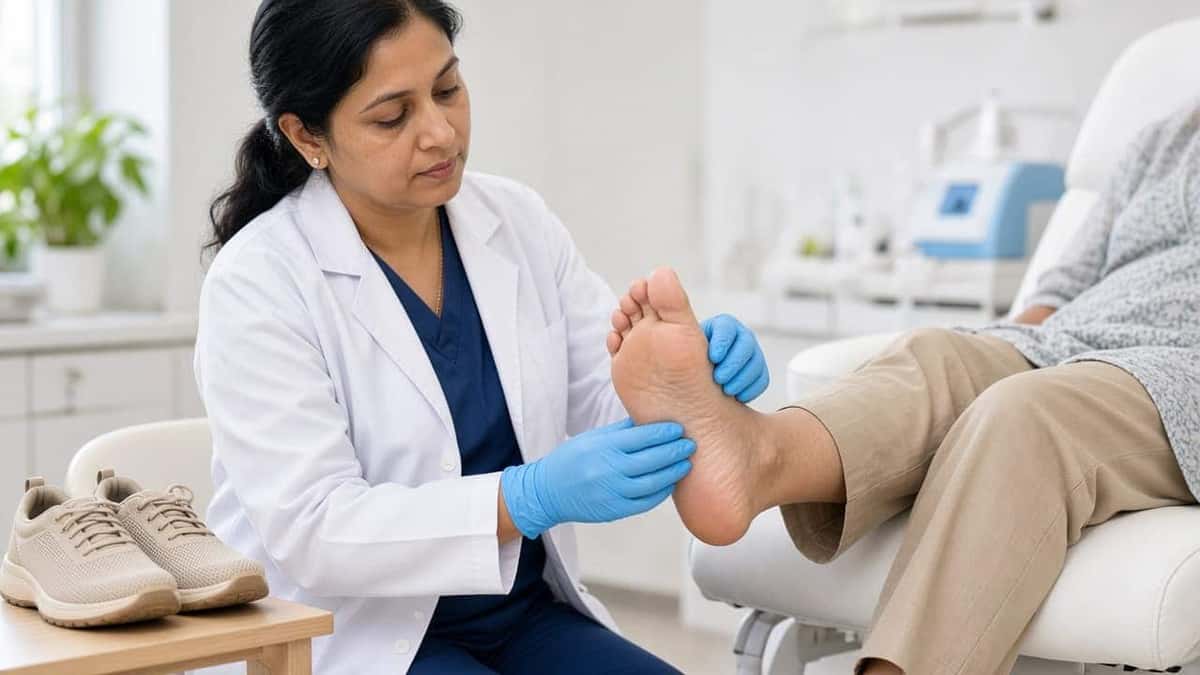
- Look at the soles, heels, and spaces between the toes every day, using a mirror if bending is difficult
- Ask another person to look if your vision or flexibility makes this hard
- Wear shoes that have been checked for rough lining, and never walk barefoot outdoors
- Keep skin clean and dry, and trim nails straight across or ask a trained clinician if sensation is reduced
- Tell your diabetes clinician about numbness, a change in foot shape, or any callus
03
When a small mark is no longer small
A blister, a black spot under a callus, or a crack that is moist should be assessed promptly. Fever, spreading redness, a bad smell, or a toe that has changed colour needs same-day emergency care. Lack of pain is not a reassuring sign in neuropathy.
This page is general education about vascular conditions and the way they are usually assessed. It does not diagnose a person or replace a consultation. Decisions about tests and treatment depend on an individual clinical assessment. Nothing on this website promises a particular result, a cure, or freedom from pain.