A wound on the leg or foot that remains open for several weeks needs a cause, not only a new dressing. Common vascular causes include venous hypertension from varicose veins, poor arterial supply, or a mixture of both. Diabetes, pressure, and infection often contribute.
Dr. K. Athirath Reddy assesses non-healing wounds as part of vascular and diabetic foot practice at Jade Clinics, Kokapet, Hyderabad. The first task is to find why the wound is still open. A healing time is not promised at the first visit.
A wound that is not clearly smaller after about two weeks of reasonable care, or any foot wound in a person with diabetes, should be assessed rather than managed only with repeated dressing changes.
What We Offer

Chronic Wound Assessment & Management
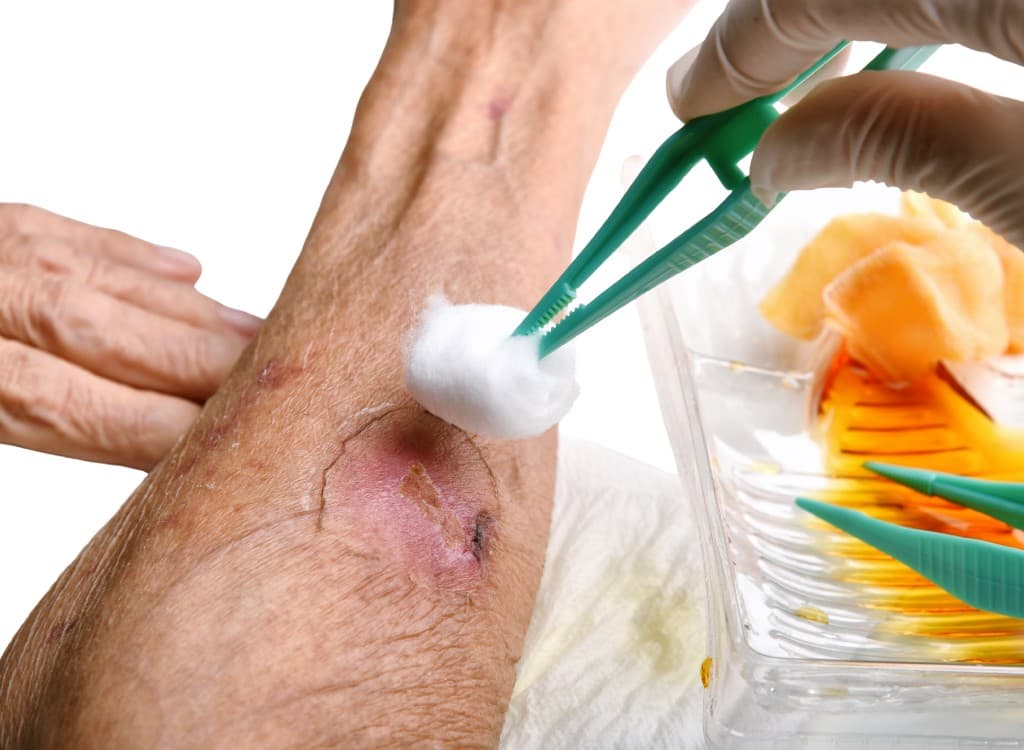
A chronic wound is one that has stopped making progress with ordinary dressings. Assessment asks how long it has been open, what has already been tried, and whether pressure, infection, or poor flow is keeping it open. The edge, the base, and the surrounding skin are examined. Management is aimed at the cause, not only at the dressing product. A healing time is not given at the first visit.

Non-Healing Ulcer Evaluation
Ulcers on the leg or foot are evaluated for a venous, arterial, diabetic, or pressure cause, because the treatment is different for each. Location, depth, and the pulse examination are the starting point. Ultrasound or pressure studies are added when circulation is in doubt. Compression is used for suitable venous ulcers only after arterial flow has been checked. Bring previous dressing notes and a list of antibiotics already used.

Vascular Assessment of Chronic Wounds
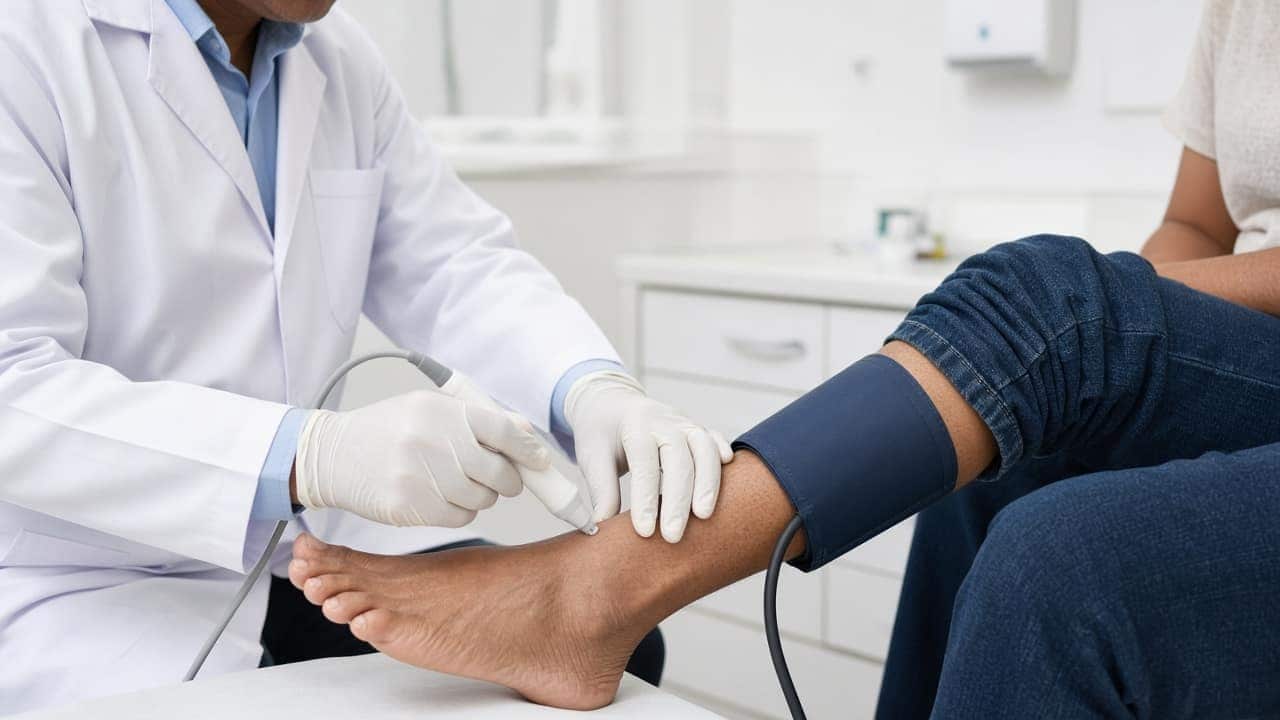
A wound that will not heal needs a circulation check before more dressings are stacked on it. Weak pulses, a cold foot, or pain on walking suggest an arterial limit. Swelling and skin staining around the ankle suggest a venous limit. Duplex ultrasound and pressure measurements are used when they will change the plan. If flow is the reason the wound is open, treating the vessel may matter more than the dressing.

Infected Wound Management
Infection is suspected when a wound becomes more painful, red, swollen, or starts to discharge, or when the person develops fever. Stable infection can be reviewed in clinic with a plan for antibiotics and local care. Rapidly spreading redness, fever, or black tissue needs emergency care. The circulation is checked at the same time, because infected tissue heals poorly when flow is poor. Antibiotics already taken should be listed at the visit.

Advanced Wound Care & Follow-Up
Advanced wound care means a plan that combines the right dressing, pressure relief or compression, infection control, and vascular treatment when that is the missing piece. Follow-up measures whether the wound is smaller, not whether a product was applied. The interval depends on how active the wound is. A wound that is enlarging between visits should be reported rather than waiting. Photographs can help the record, but they do not replace examination.
01
Common symptoms and warning signs
- A sore that has not closed after two weeks of reasonable care
- Increasing size, smell, or drainage
- Dark skin edges or exposed deeper tissue
- Swelling and skin staining around the wound
- Pain that is new or worsening
02
When to seek medical assessment
Seek assessment if a wound is enlarging, if you have diabetes, or if pulses in the foot are difficult to feel. Seek emergency care for fever, rapidly spreading redness, or a limb that becomes cold and pale.
03
Diagnostic and treatment approaches
- Identifying whether the wound is mainly venous, arterial, diabetic, pressure-related, or mixed
- Duplex ultrasound or pressure studies when circulation is in question
- Compression for suitable venous ulcers, after arterial supply has been checked
- Offloading and infection care for diabetic and pressure wounds
- Revascularisation or vein treatment when that is what is limiting healing
04
What to expect at consultation
Please bring previous dressing notes and a list of antibiotics already used. The wound, the surrounding skin, and the pulses are examined. A healing time cannot be promised at the first visit. The first task is to find the reason the wound is still open.
05
Why does a leg or foot wound stop healing?
A wound closes when the cause is removed and the tissue has enough blood, enough protection from pressure, and control of infection. If one of those is missing, a new dressing product rarely changes the result. Venous ulcers stay open because pressure in the leg veins remains high. Arterial wounds stay open because the foot is short of blood. Diabetic and pressure wounds stay open because load keeps falling on the same spot, often in a foot that cannot feel the injury.
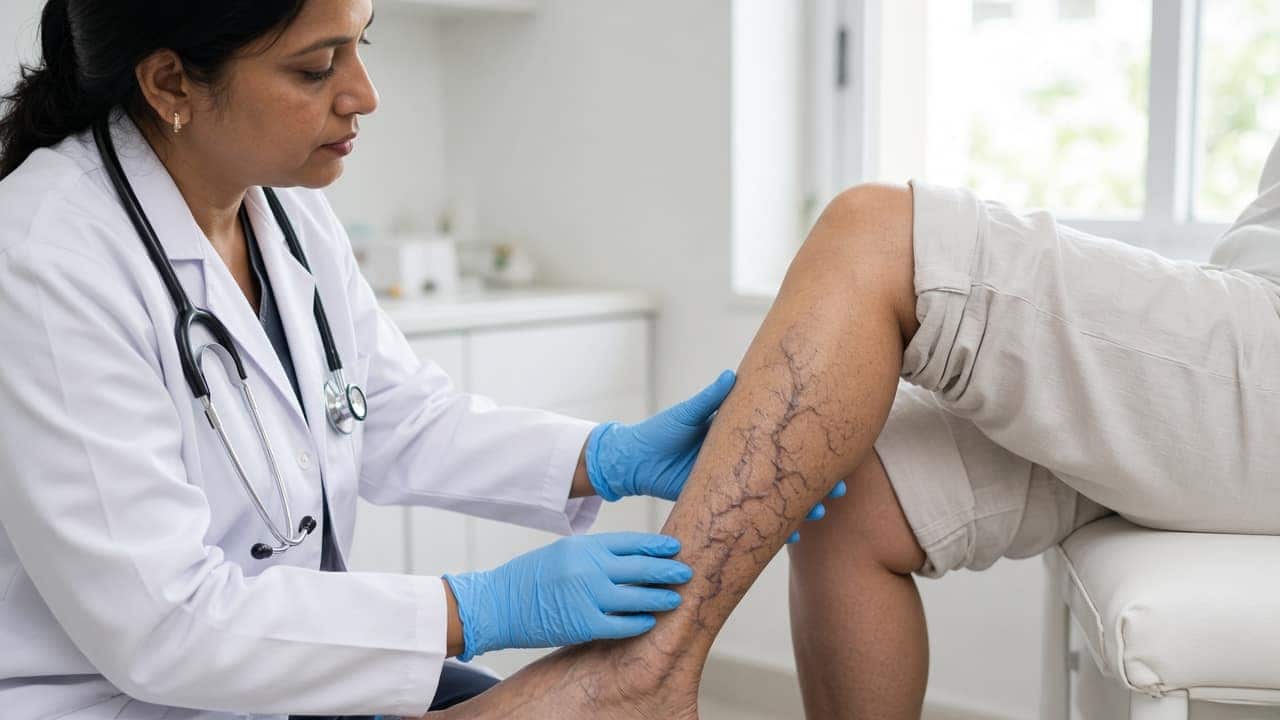
Mixed wounds are common. A person can have leaking veins and narrowed arteries in the same leg, especially with diabetes and smoking. Treating only the veins, or applying firm compression without checking arteries, can make an arterial wound worse. Location is a clue: inner-ankle sores with skin staining often have a venous share; toe and heel sores with weak pulses often have an arterial share. The examination confirms the clue. It does not stop at the guess.
Infection is suspected when pain, redness, smell, or drainage increases, or when fever appears. Stable infection can be reviewed in clinic. Rapidly spreading redness, fever, or black tissue needs emergency care. Antibiotics already used should be listed, because repeating the same medicine without knowing the cause wastes time.
06
How are non-healing wounds investigated?
The history covers how the wound began, how long it has been open, what dressings and antibiotics have been used, and whether walking pain, swelling, or diabetes is present. The edge, the base, the surrounding skin, and the pulses are examined. Duplex ultrasound or pressure studies are added when circulation is in question. Tests are chosen because they change treatment, not to complete a panel.
Compression is the main treatment for a suitable venous ulcer, after arterial supply has been checked. Closing a leaking truncal vein is considered when the scan shows that reflux is keeping the wound open. Offloading is the main mechanical treatment for a diabetic or pressure wound. Revascularisation is considered when poor arterial flow is the limit. Advanced dressings support those steps. They do not replace them.
Follow-up measures whether the wound is smaller. A wound that enlarges between visits should be reported rather than waiting for the next routine date. Photographs help the record. They do not replace examination of depth, smell, and pulses.
07
Where can a non-healing wound be assessed in Hyderabad?
Planned assessment is with Dr. Athirath Reddy at Jade Clinics, Kokapet, Monday to Saturday, 5:00 PM–8:00 PM. Call +91 99088 77878. Bring dressing notes, a medicine list, and any Doppler or blood tests. People attend from Kokapet and other parts of Hyderabad for a second look at a wound that has been dressed for weeks without progress.
Seek emergency care for fever, rapidly spreading redness, or a limb that becomes cold and pale. Those signs are not appropriate for the next evening slot. Once the emergency has been treated, the clinic can review the circulation and the reason the wound opened.
A useful consultation names the main reason the wound is open in plain language: vein pressure, artery flow, pressure on a numb foot, infection, or a mixture. If that reason is not yet known, the next test is the plan, not another week of the same dressing. Bring a list of what has already failed. Repeating a product that did not change the wound size is not a strategy. Measurement matters more than a description that the wound “looks better”. Compare the size with the last visit. Pain that is new, a dark edge, or exposed deeper tissue should be mentioned at the start of the visit, not only if there is time at the end.
Questions patients ask
How long is too long for a leg wound to stay open?
A wound that is not clearly smaller after about two weeks, or any foot wound in a person with diabetes, should be assessed rather than managed only with repeated dressing changes.
Is compression safe for every leg ulcer?
No. Compression helps many venous ulcers, but it can be harmful if arterial supply is poor. Circulation should be checked before firm compression is used.
What is the difference between a venous ulcer and an arterial wound?
A venous ulcer is usually around the inner ankle, with swelling and skin staining, and it is treated with compression once arteries are known to be adequate. An arterial wound is often on the toe or heel, with weak pulses, and it needs a blood-flow assessment before compression or a procedure.
Will a different dressing close a chronic wound?
A dressing protects the surface. It does not correct high vein pressure, poor arteries, or repeated pressure on the sole. Those causes have to be identified. The dressing is then chosen to support that plan.
When is a non-healing wound an emergency?
Fever, rapidly spreading redness, black tissue, or a suddenly cold and pale limb needs emergency care the same day. A stable wound that is slow to close can be booked for vascular consultation.
This page is general education about vascular conditions and the way they are usually assessed. It does not diagnose a person or replace a consultation. Decisions about tests and treatment depend on an individual clinical assessment. Nothing on this website promises a particular result, a cure, or freedom from pain.