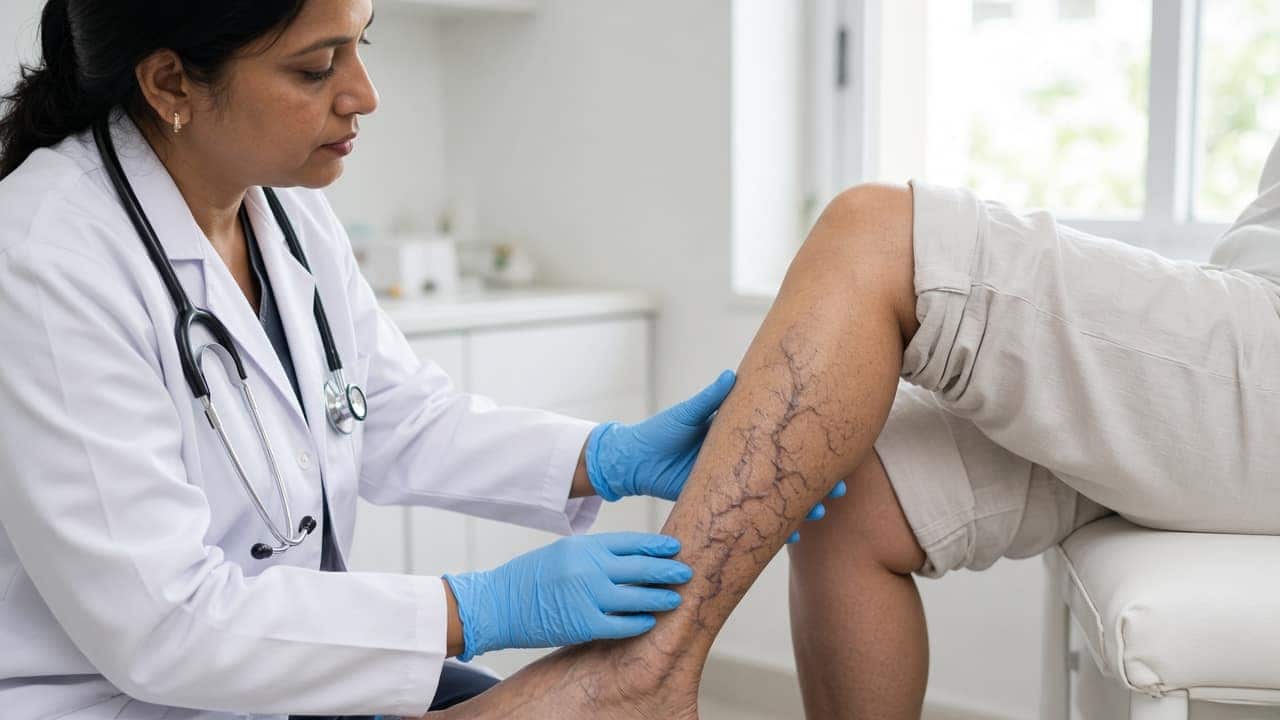
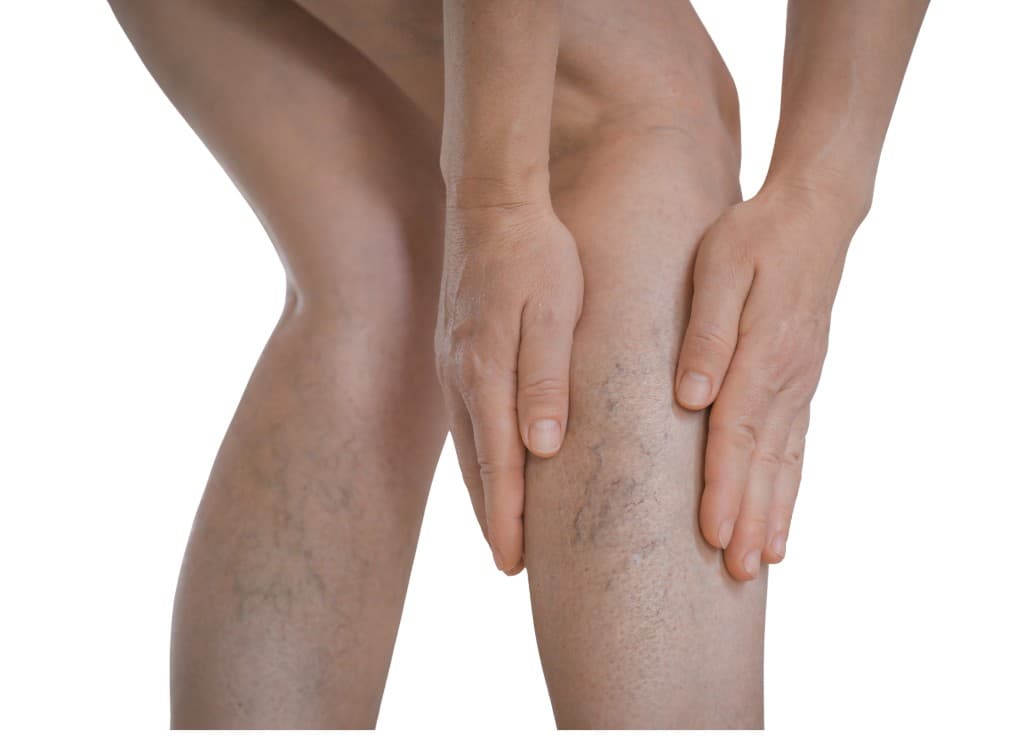
Varicose veins are enlarged, twisted veins, usually in the legs. They develop when valves that normally keep blood moving toward the heart do not close well, so blood pools in the surface veins.
Many people in Hyderabad seek care because of appearance, aching, or heaviness. Assessment also looks for skin damage and ulcers, which are medical problems and not only a cosmetic concern. Dr. K. Athirath Reddy assesses varicose veins and other venous disorders at Jade Clinics, Kokapet.
A leaking surface vein can be watched, supported with compression, or treated by closing it, depending on symptoms and the ultrasound. Treatment is not offered as a guaranteed permanent cure. New veins can appear later, and that possibility is discussed before any procedure.
What We Offer

Varicose Vein Evaluation & Management
Varicose vein care begins with symptoms, skin changes, and a standing examination, not with a procedure chosen in advance. Duplex ultrasound maps which veins are leaking and whether the deep veins are open. Management can be compression and activity when that is enough. A procedure is discussed when aching, swelling, skin damage, or the scan findings justify it. Veins can recur, and that possibility is part of the conversation.

Chronic Venous Disease Assessment
Chronic venous disease is more than visible veins. It includes heaviness, ankle swelling, skin darkening, eczema, and ulcers from long-standing high pressure in the leg veins. The assessment looks for leaking valves and for other causes of swelling that should not be missed. Compression is often the first measure after arterial supply has been checked. Treatment of a truncal vein is considered when the ultrasound and the skin findings support it.

Endovenous Laser Treatment
Endovenous laser treatment closes a leaking truncal vein with heat delivered through a thin fibre, usually under ultrasound guidance. It is one option for selected vein patterns, not a treatment for every visible vein. Suitability depends on the vein diameter, the pathway, and whether the deep veins are open. Smaller veins may be better treated with foam or left alone. The visit explains what laser treatment does not do, including a guarantee that no vein will return.

Management of Leg Swelling & Venous Symptoms
Aching, heaviness, and swelling that worsen through the day can come from venous disease, but they also have other causes. The consultation separates a vein problem from joint disease, medicines, and a new clot. Elevation, walking, and fitted compression help some people once the arterial supply is known to be adequate. Sudden one-sided swelling and pain is not a routine vein visit. That pattern needs same-day assessment for deep vein thrombosis.

Venous Ulcer Evaluation & Treatment
A venous ulcer is an open sore, often near the inner ankle, caused by sustained high pressure in the leg veins. Evaluation checks the wound, the surrounding skin, and whether artery flow is good enough for compression. Compression is the main treatment for a suitable venous ulcer. Closing a leaking truncal vein is considered when the scan shows that this is keeping the wound open. A healing time is not promised at the first visit.
01
Common symptoms and warning signs
- Twisted veins that are visible under the skin
- Aching, heaviness, itching, or throbbing, often worse later in the day
- Swelling around the ankle
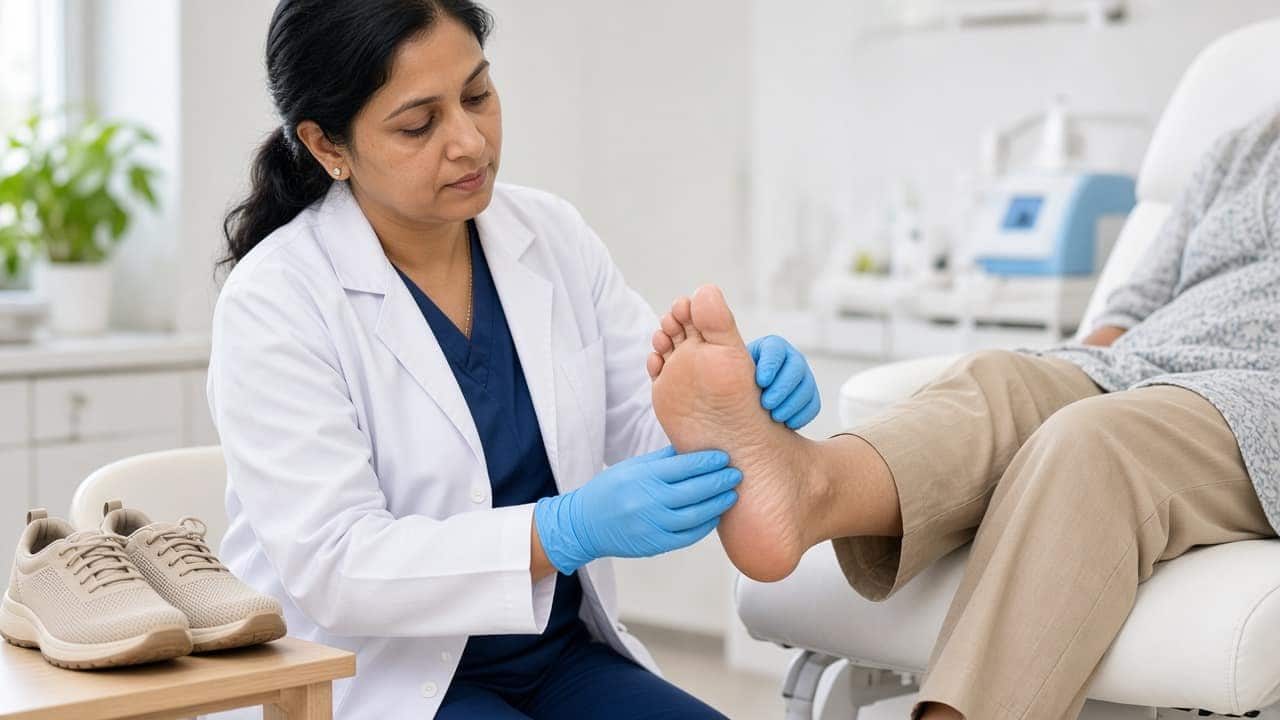
- Brownish skin colour, eczema, or hardened skin near the ankle
- Bleeding from a surface vein
- An open sore, usually around the inner ankle
02
When to seek medical assessment
Ask for a vein assessment if symptoms limit daily activity, if the skin is changing colour, or if a wound has appeared. Bleeding from a varicose vein should be pressed firmly and then checked by a doctor.
Sudden one-sided leg swelling and pain can be a sign of deep vein thrombosis and needs urgent assessment rather than a routine varicose vein visit.
03
Diagnostic and treatment approaches
Duplex ultrasound maps which veins are leaking and guides treatment. Compression stockings, walking, and leg elevation help some symptoms. Procedures are considered when symptoms, skin changes, or the ultrasound findings justify them.
- Compression and lifestyle measures
- Endovenous heat or adhesive closure of a leaking truncal vein, when suitable
- Foam sclerotherapy for selected smaller veins
- Surgery such as ligation or phlebectomy in selected patterns of disease
04
What to expect at consultation
The visit covers how long the veins have been present, previous clots, pregnancies, and any ulcer. Standing examination and, when needed, an ultrasound plan follow. Treatment is not offered as a guaranteed permanent cure. Veins can recur, and the chance of that is discussed individually.
05
What are varicose veins and chronic venous disease?
Varicose veins are surface veins that have stretched and become visible. Chronic venous disease is the wider problem: faulty valves, high pressure in the leg veins, aching, ankle swelling, brown skin staining, eczema, and, in later stages, an ulcer near the inner ankle. A person can have skin damage with veins that are not very obvious, so the consultation looks beyond appearance.
The usual cause is valve leakage in a truncal vein, often the great saphenous vein on the inner thigh and calf, or the small saphenous vein at the back of the calf. Blood then falls back down the leg when the person stands. Pregnancy, family history, prolonged standing, previous clots, and weight can contribute. They do not, by themselves, decide whether a procedure is useful.
Spider veins and reticular veins are smaller. They may be a cosmetic concern and they may sit alongside truncal reflux. Foam sclerotherapy is considered for selected smaller veins. It is not automatically paired with a truncal procedure, and it is not the right treatment for every mark on the skin.
06
How are varicose veins assessed and treated in Hyderabad?
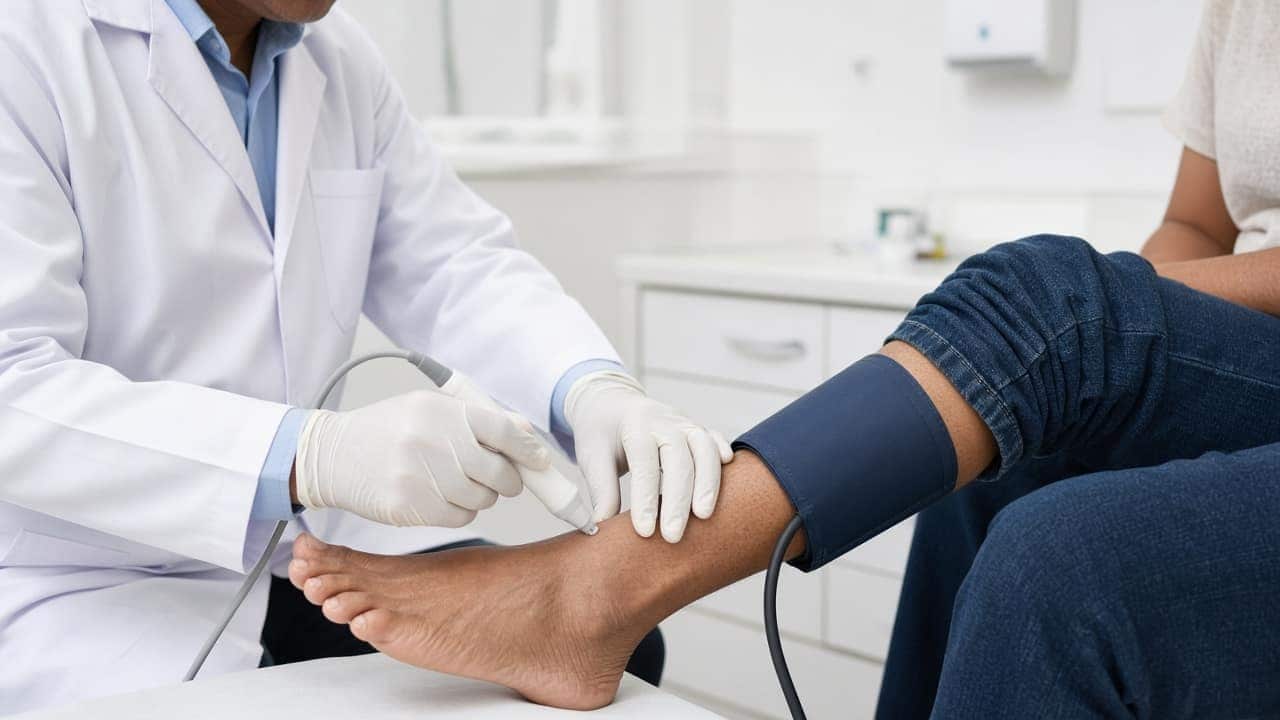
Duplex ultrasound, done standing, maps which veins leak and checks that the deep veins are open. That map decides whether compression alone is reasonable, or whether a truncal vein should be closed. Closing a vein that is not the source of the symptoms does not help. Leaving a clearly leaking truncal vein untreated may be right when symptoms are mild and the skin is healthy.
When a procedure is suitable, options include heat closure with laser or radiofrequency, adhesive closure, foam sclerotherapy, and surgery such as ligation or phlebectomy. The method follows the vein’s size, its course, and whether the deep system is open. Heat and adhesive treatments are hospital or procedure-room treatments guided by ultrasound. They are discussed at Jade Clinics, Kokapet. They are not performed during the evening consultation itself.
Compression stockings, walking, and raising the legs ease heaviness and swelling for many people. Stockings do not seal a leaking valve. Firm compression is used only after arterial supply has been checked, because tight stockings can harm a foot with poor arteries. A venous ulcer needs that check before compression is relied on as treatment.
07
When should someone in Hyderabad book a vein consultation?
Book a planned visit when aching, heaviness, or swelling limits the day, when skin colour is changing around the ankle, when a sore has opened, or when a vein has bled. Dr. K. Athirath Reddy consults at Jade Clinics, Kokapet, Monday to Saturday, 5:00 PM–8:00 PM. Call +91 99088 77878 to request a time. Bring any earlier scan and a note of previous clots or pregnancies.
Sudden swelling and pain in one leg is a different problem. It can be deep vein thrombosis and needs same-day assessment, not a routine varicose vein booking. Chest pain, coughing blood, fainting, or sudden breathlessness with a swollen leg is an emergency. Go to an emergency department. Do not wait for the Kokapet evening clinic.
After treatment, follow-up checks the treated vein, the skin, and any new surface veins. Recurrence is a known feature of venous disease, not a failure that can be ruled out in advance. A second opinion on a scan done elsewhere is also a reasonable reason to attend. Bring the images, not only the written conclusion.
Questions patients ask
Are varicose veins only a cosmetic issue?
No. Some are mainly a concern of appearance, but aching, swelling, skin damage, bleeding, and ulcers are medical reasons for assessment.
Can stockings replace a procedure?
Stockings can ease swelling and aching for some people. They do not close a leaking vein. Whether a procedure is useful depends on symptoms and the ultrasound.
Which varicose vein treatment is best?
There is no single best method. Laser, radiofrequency, adhesive closure, foam, and surgery each suit different vein patterns. The ultrasound and the skin findings decide. A method is not chosen because it is newer.
Can varicose veins come back after treatment?
Yes. Treated veins can reopen, and new veins can appear. The chance is individual. A consultation explains that limit before a procedure is planned. It is not described as a permanent cure.
Is sudden leg swelling a varicose vein problem?
Not necessarily. New one-sided swelling and pain can be a deep vein clot and needs same-day assessment. Chest pain or sudden breathlessness with that swelling is an emergency. A routine vein clinic is for stable symptoms and for follow-up.
Where can I see a varicose vein specialist in Hyderabad?
Dr. K. Athirath Reddy consults on varicose veins and venous disease at Jade Clinics, Kokapet, Hyderabad, Monday to Saturday, 5:00 PM–8:00 PM. Call +91 99088 77878. The appointment is confirmed only when the clinic agrees a time.
This page is general education about vascular conditions and the way they are usually assessed. It does not diagnose a person or replace a consultation. Decisions about tests and treatment depend on an individual clinical assessment. Nothing on this website promises a particular result, a cure, or freedom from pain.