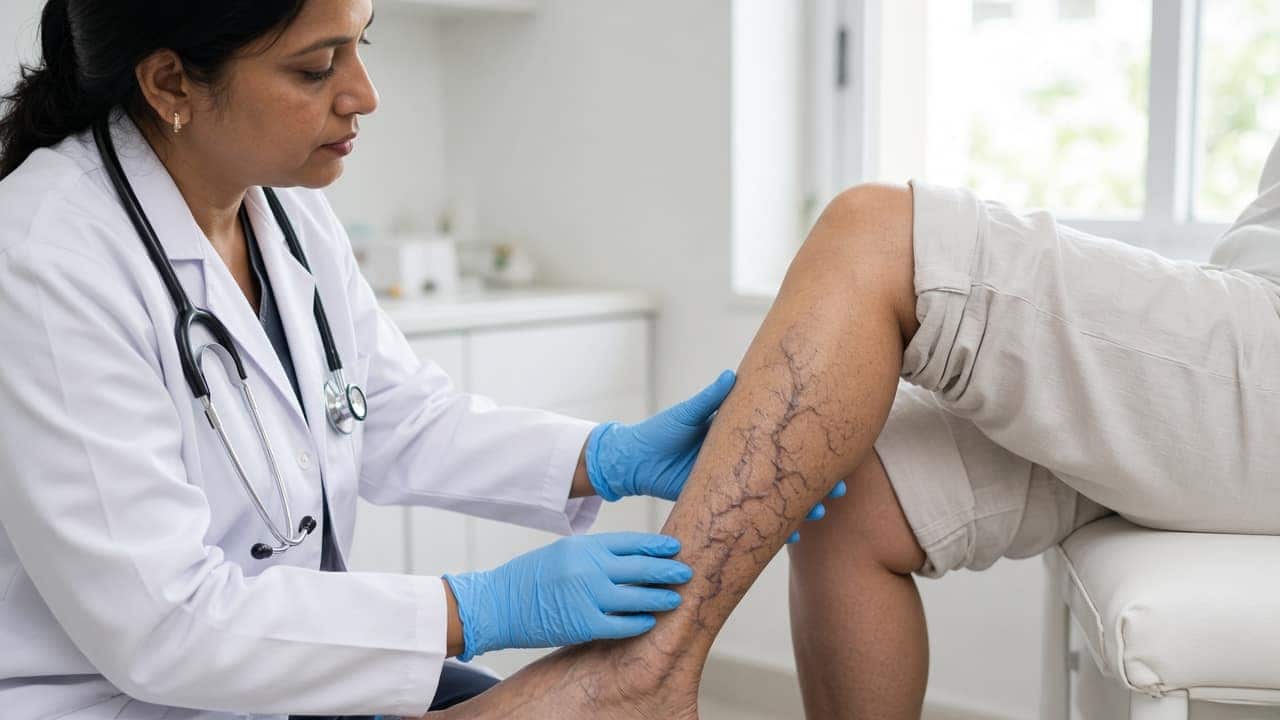
They are common. They are not always painful, and they are not always a reason for a procedure. They do deserve an assessment when they ache, swell, bleed, or damage the skin.
What We Offer

Varicose Vein Evaluation & Management
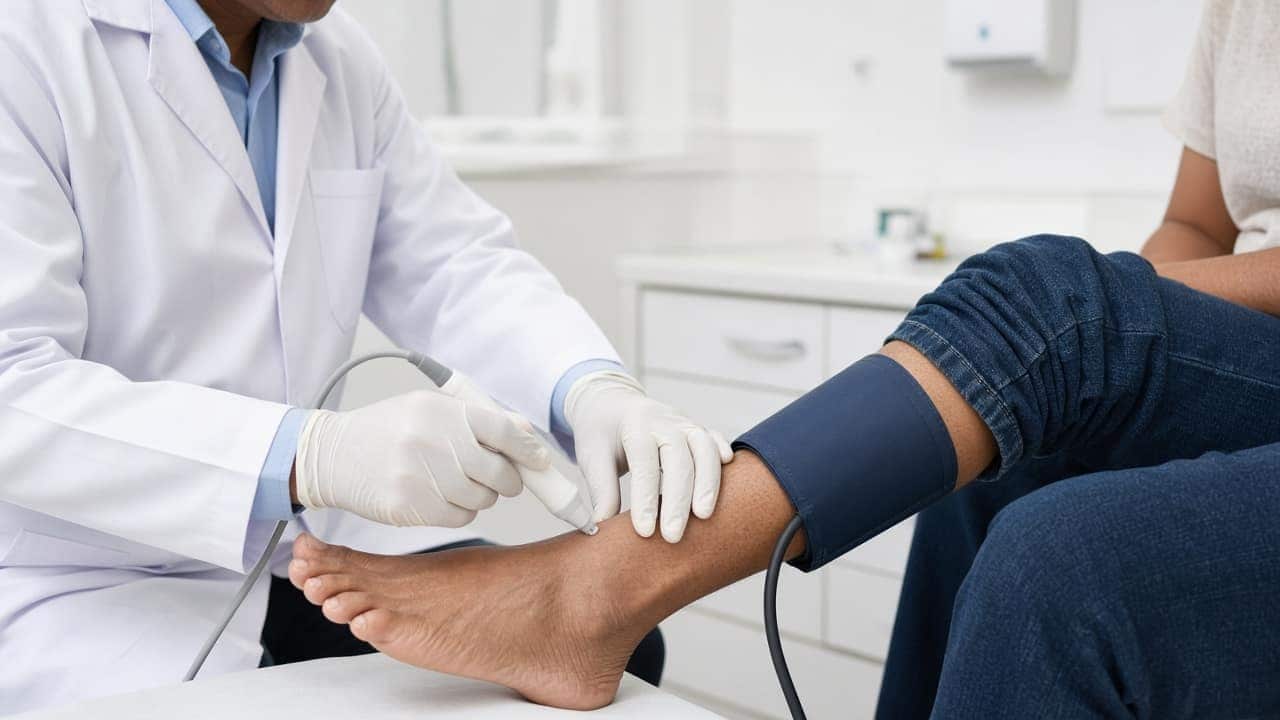
Varicose vein care begins with symptoms, skin changes, and a standing examination, not with a procedure chosen in advance. Duplex ultrasound maps which veins are leaking and whether the deep veins are open. Management can be compression and activity when that is enough. A procedure is discussed when aching, swelling, skin damage, or the scan findings justify it. Veins can recur, and that possibility is part of the conversation.

Chronic Venous Disease Assessment
Chronic venous disease is more than visible veins. It includes heaviness, ankle swelling, skin darkening, eczema, and ulcers from long-standing high pressure in the leg veins. The assessment looks for leaking valves and for other causes of swelling that should not be missed. Compression is often the first measure after arterial supply has been checked. Treatment of a truncal vein is considered when the ultrasound and the skin findings support it.

Endovenous Laser Treatment
Endovenous laser treatment closes a leaking truncal vein with heat delivered through a thin fibre, usually under ultrasound guidance. It is one option for selected vein patterns, not a treatment for every visible vein. Suitability depends on the vein diameter, the pathway, and whether the deep veins are open. Smaller veins may be better treated with foam or left alone. The visit explains what laser treatment does not do, including a guarantee that no vein will return.

Management of Leg Swelling & Venous Symptoms
Aching, heaviness, and swelling that worsen through the day can come from venous disease, but they also have other causes. The consultation separates a vein problem from joint disease, medicines, and a new clot. Elevation, walking, and fitted compression help some people once the arterial supply is known to be adequate. Sudden one-sided swelling and pain is not a routine vein visit. That pattern needs same-day assessment for deep vein thrombosis.

Venous Ulcer Evaluation & Treatment
A venous ulcer is an open sore, often near the inner ankle, caused by sustained high pressure in the leg veins. Evaluation checks the wound, the surrounding skin, and whether artery flow is good enough for compression. Compression is the main treatment for a suitable venous ulcer. Closing a leaking truncal vein is considered when the scan shows that this is keeping the wound open. A healing time is not promised at the first visit.
01
What is happening in the leg
Healthy vein valves keep blood moving toward the heart. When a valve leaks, pressure in the veins below it rises. Over time the vein wall widens. That higher pressure can also stain the skin, cause eczema, and contribute to an ulcer.
02
Symptoms people report
- Visible twisted veins
- Heaviness or aching after standing
- Itching over the vein
- Ankle swelling by evening
- Brown discolouration or a hardened patch near the ankle
- A wound that opens near the inner ankle
03
When to seek assessment
Seek a vein consultation if symptoms affect your day, if the skin colour is changing, or if a sore has opened. Sudden swelling of the whole leg is a different problem and should be assessed urgently for deep vein thrombosis.
04
How varicose veins are usually evaluated
A clinician examines the leg standing and asks about clots, pregnancies, and previous vein treatment. Duplex ultrasound shows which veins leak. Treatment, if it is needed, is aimed at those veins. Details of approaches used in this practice are on the varicose vein service page.
Questions patients ask
Do varicose veins always get worse?
Not in a predictable way for every person. Some stay stable. Skin damage and ulcers are reasons to be assessed rather than to wait for the vein to enlarge further.
Can exercise cause varicose veins?
Standing for long periods is associated with symptoms. Ordinary walking is generally helpful for the calf muscle pump. Veins that already leak do not close with exercise alone.
This page is general education about vascular conditions and the way they are usually assessed. It does not diagnose a person or replace a consultation. Decisions about tests and treatment depend on an individual clinical assessment. Nothing on this website promises a particular result, a cure, or freedom from pain.