Mixed ulcers have both problems. Treating them as a simple skin issue delays the check that actually changes healing.
01
Why a wound stays open
Healing needs reasonable blood supply, control of swelling or pressure, and control of infection. A venous ulcer stays open while pressure in the veins remains high. An arterial ulcer stays open while the tissue is short of blood. Dressings cover the surface. They do not correct either driver.
02
Clues to the type of ulcer
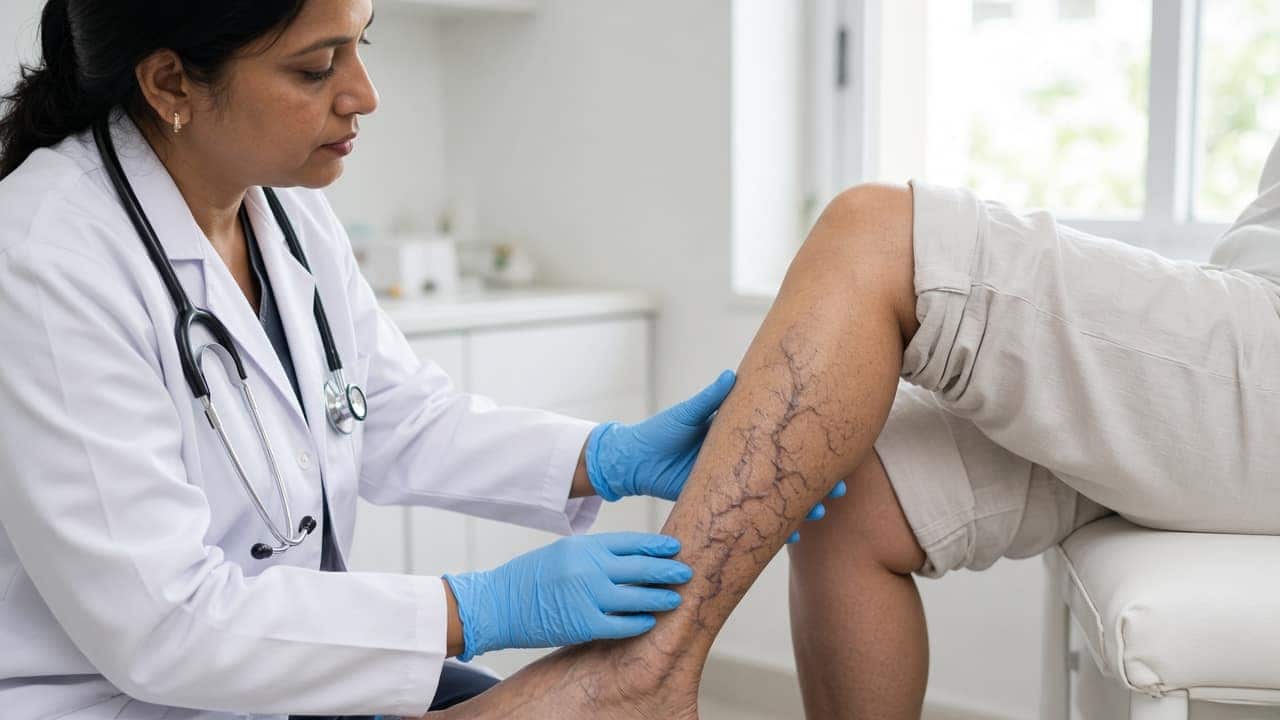
- Inner ankle, swelling, and brown skin suggest a venous contribution
- A painful toe or heel wound, with weak pulses, suggests an arterial contribution
- A wound in a person with diabetes may have neuropathy even when it looks small
- Increasing odour, redness, or fever suggests infection
03
When to seek assessment
Ask for assessment if a leg wound is still open after about two weeks, or sooner if you have diabetes or known circulation disease. Emergency care is needed for rapidly spreading infection or a suddenly ischaemic foot.
04
How these ulcers are usually evaluated
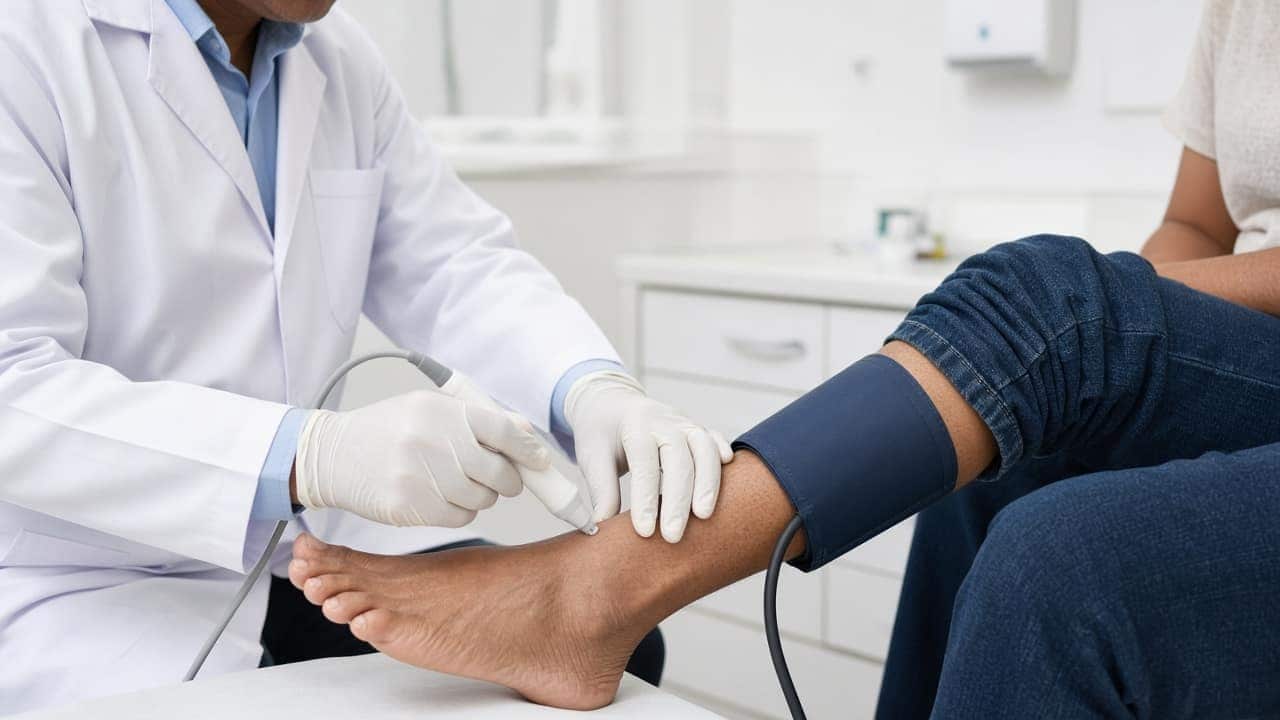
Examination of the wound edge, the pulses, and the surrounding skin comes first. An arterial circulation check should happen before strong compression. Venous duplex is used when varicose veins or old clots may be driving the ulcer.
Questions patients ask
Are all ankle ulcers caused by varicose veins?
Many are related to venous disease, including veins that do not look very varicose on the surface. Arterial disease and diabetes still have to be excluded.
Can an ulcer close and still need vein treatment?
Sometimes yes. If the underlying vein pressure remains high, the ulcer can return. That decision follows an ultrasound, not the fact of closure alone.
This page is general education about vascular conditions and the way they are usually assessed. It does not diagnose a person or replace a consultation. Decisions about tests and treatment depend on an individual clinical assessment. Nothing on this website promises a particular result, a cure, or freedom from pain.