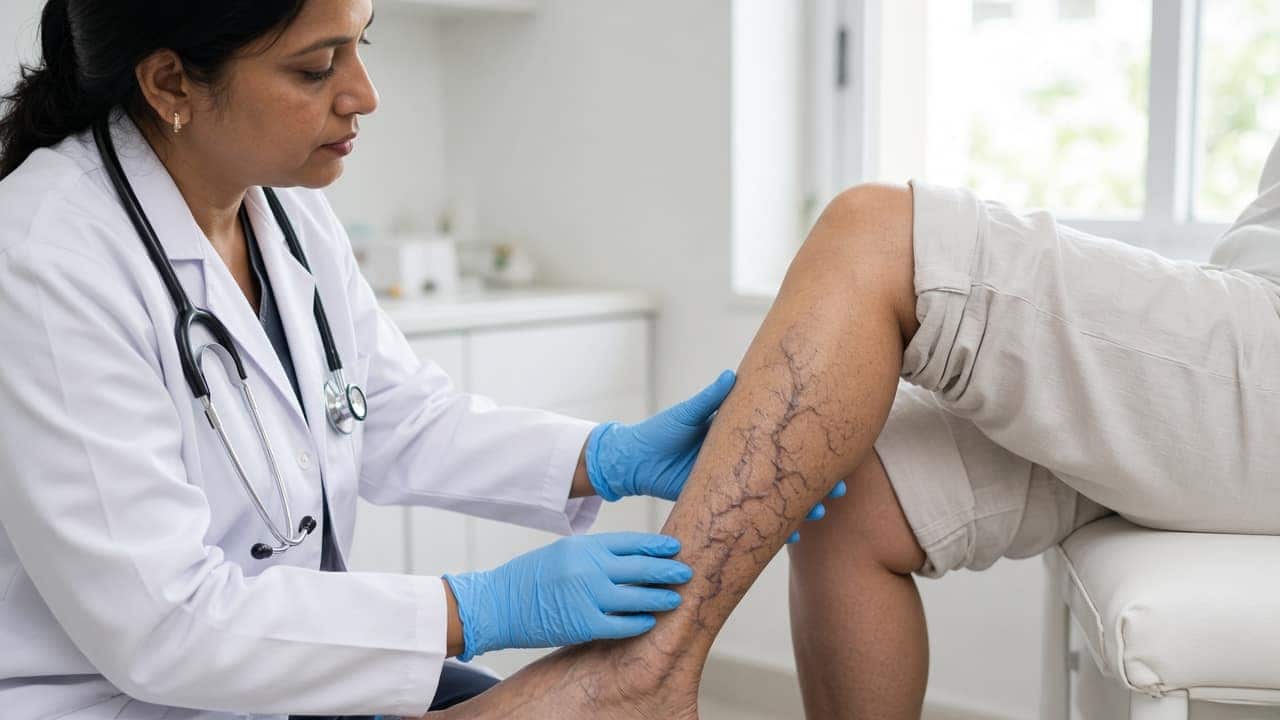
A vascular consultation sorts which of these is present. That distinction matters, because compression that helps a venous leg can harm an arterial one.
01
Arterial and venous patterns
Arterial symptoms are often pain on walking, a cold pale foot, and wounds on the toes. Venous symptoms are often heaviness, swelling, staining of the gaiter area, and an ulcer near the ankle. Some people have both, especially after years of diabetes or smoking.
02
Symptoms worth describing at a visit
- How far you can walk before pain starts, and whether rest relieves it
- Whether pain is worse in bed
- Colour of the toes in the morning and after a walk
- Any wound, including small ones between the toes
- Smoking history and diabetes, even if sugars are now controlled
03
When to seek assessment
Ask for assessment if walking distance is shrinking or a wound has appeared. A foot that becomes suddenly cold, white, or blue, with severe pain or numbness, needs emergency care the same day.
04
How circulation is usually checked
The examination compares pulses, temperature, and colour. Ankle pressures and ultrasound add numbers to the examination. Treatment follows the cause. There is no single circulation medicine that replaces that assessment.
Questions patients ask
Are cold feet always blocked arteries?
No. Cold sensitivity and nerve disease are common. Blocked arteries become more likely when walking pain, weak pulses, or a wound are also present.
Can I judge circulation from the colour of my skin at home?
Colour is a clue, not a test. A persistently pale, blue, or black toe should be examined by a doctor rather than photographed and watched for several days.
This page is general education about vascular conditions and the way they are usually assessed. It does not diagnose a person or replace a consultation. Decisions about tests and treatment depend on an individual clinical assessment. Nothing on this website promises a particular result, a cure, or freedom from pain.