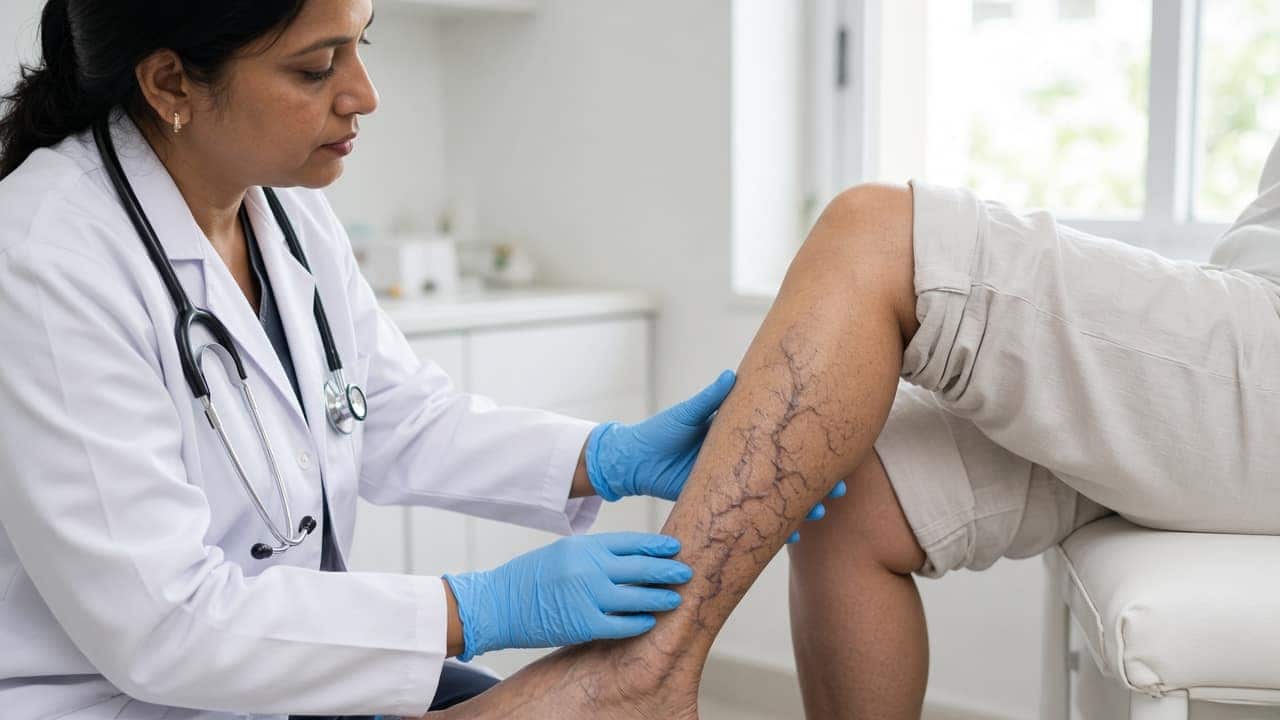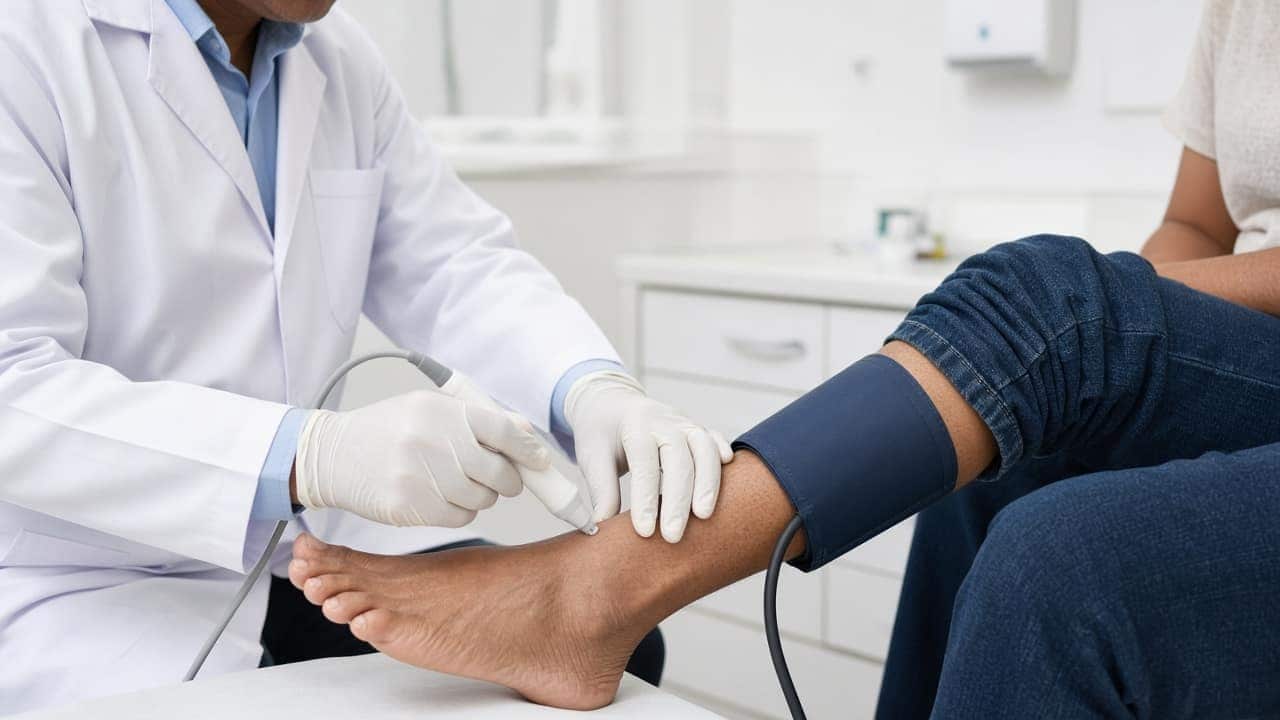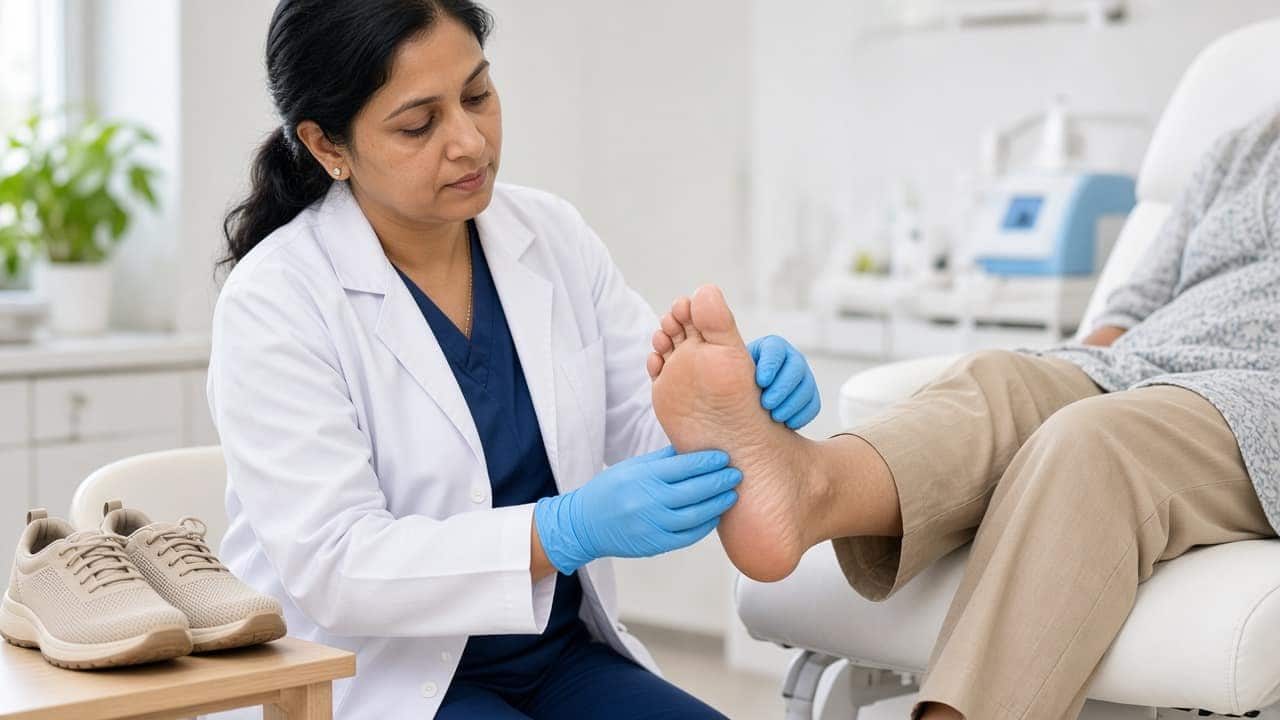
Muscle and nerve tolerate only a limited time without blood flow. This page exists so that patients and families can recognise it and go to an emergency department. It is not a condition to book into the next evening clinic.
01
How it differs from walking pain
Chronic arterial disease builds over months. Acute ischaemia changes over minutes or hours. The person can often say when the pain started. The foot becomes cold and pale, and moving the toes may become difficult. That sudden change is the warning.
02
Warning signs often called the Ps
- Pain that is sudden and severe
- Pallor, or a white or mottled foot
- Pulselessness below the blockage
- Poikilothermia, meaning the limb takes on the cool temperature of the room
- Paraesthesia, meaning pins and needles or numbness
- Paralysis, meaning weakness, which is a late and serious sign
03
What to do
Go to the nearest emergency department or call emergency services. Keep the limb still and do not apply heat or ice. Tell the emergency team when the pain started and whether there is an irregular heartbeat, a known aneurysm, or a previous bypass. After emergency treatment, follow-up can be arranged with a vascular surgeon.
04
How hospitals usually respond
The emergency team examines pulses and sensation and starts blood-thinning treatment when appropriate. Imaging is done if it will not dangerously delay restoring flow. Treatment may include clot-dissolving medicine, clot removal, angioplasty, or bypass. The choice is made in hospital, for that limb, at that hour.
Questions patients ask
Should I wait to see if a cold foot warms up?
No, not when the change was sudden and the foot is painful, pale, or numb. Warming it at home delays care and can worsen injury. Use emergency services.
Can this happen if I have never had leg pain before?
Yes. A clot from the heart, or a clot related to an irregular rhythm, can block a previously open artery. Lack of a long history does not make the event safe.
This page is general education about vascular conditions and the way they are usually assessed. It does not diagnose a person or replace a consultation. Decisions about tests and treatment depend on an individual clinical assessment. Nothing on this website promises a particular result, a cure, or freedom from pain.