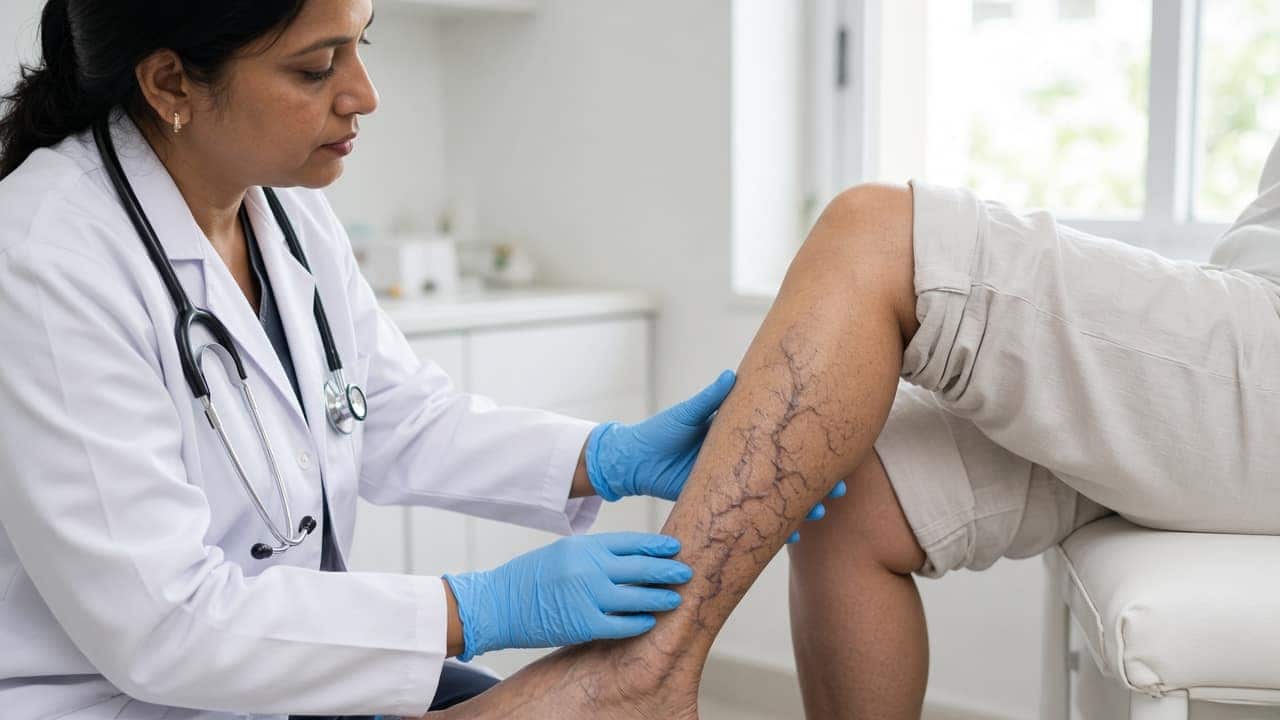
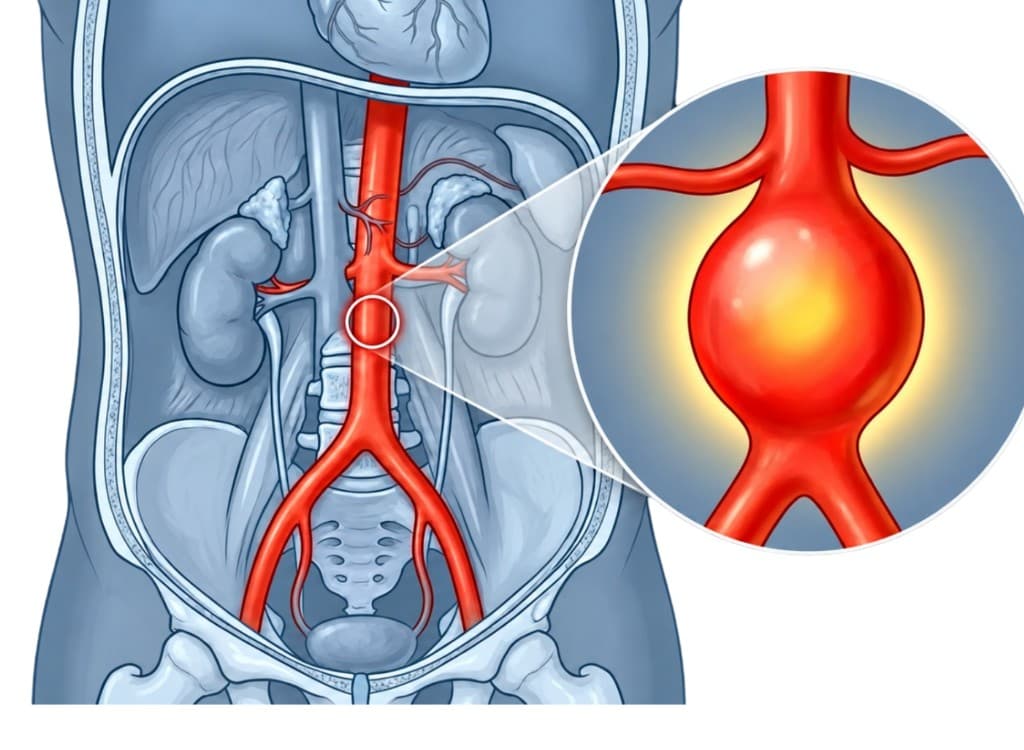
An aneurysm is a stretched, weakened section of an artery. The abdominal aorta and the arteries behind the knee are among the sites vascular surgeons assess. Many aneurysms cause no symptom and are found on a scan done for another reason.
The purpose of consultation is to confirm the size and site, look at fitness for treatment, and decide between surveillance and repair. Repair may be open or endovascular. Neither is automatic, and size alone is not the only factor. Dr. K. Athirath Reddy provides this consultation at Jade Clinics, Kokapet, Hyderabad.
A known, stable aneurysm can be reviewed in clinic. Sudden severe abdominal, back, or chest pain, collapse, or a suddenly cold and painful leg is an emergency. Do not travel to a routine evening appointment for those symptoms.
What We Offer

Aneurysm Evaluation & Monitoring
An aneurysm is an enlargement of an artery. Many smaller aneurysms are monitored with scheduled ultrasound or CT rather than repaired immediately. The visit explains what the diameter means and how often imaging is usually repeated. Blood pressure control and stopping smoking are part of that plan. Sudden severe abdominal, back, or chest pain, or collapse, is an emergency and should not be brought to a routine clinic. Bring the scan that reported the measurement.

Arterial Aneurysm Management
Management depends on the artery involved, the size, the shape, and the person’s general health. Some aneurysms are observed. Others are considered for repair when the size or the symptoms make rupture or blockage the greater concern. A personal rupture risk cannot be reduced to a guarantee. The consultation uses the existing measurements and asks for further imaging only when the decision needs it. Emergency symptoms are directed to hospital immediately.

Peripheral Aneurysm Assessment
Peripheral aneurysms, including those behind the knee, can clot and send debris into the foot even when they are not painful. Assessment checks the size, the pulses below the aneurysm, and whether the toes are already short of blood. Ultrasound is the usual first scan. Repair is discussed when the size or the clot risk justifies it, not for every enlarged artery. A suddenly cold foot below a known aneurysm is an emergency.

Vascular Imaging & Surgical Planning
Planning a repair needs images that show the necks of the aneurysm and the vessels above and below it. Ultrasound may be enough for surveillance. CT angiography is used when repair is being considered or the anatomy is unclear. The scan is read for whether an endovascular stent-graft is realistic or whether open repair fits better. Kidney function and medicines are reviewed before contrast imaging. The clinic visit explains the pictures. It does not replace emergency care for suspected rupture.

Open & Endovascular Treatment Options
Open repair and endovascular stent-graft repair are two ways to treat a suitable aneurysm. Endovascular repair uses a graft placed from inside the artery. Open repair sews in a graft through an incision. The safer or more durable choice depends on anatomy, age, and fitness, and is not the same for every person. Both are hospital procedures with follow-up. The consultation compares them for the scan in front of you.
01
Common symptoms and warning signs
- Often no symptoms at all
- A pulsatile feeling in the abdomen
- A pulsatile swelling behind the knee
- Sudden severe abdominal, back, or chest pain
- Fainting, a fast heartbeat, or collapse
- A painful, pale, or numb foot if clot from an aneurysm has travelled down the leg
02
When to seek medical assessment
A known aneurysm can be reviewed in clinic according to its size and the surveillance plan. Sudden severe abdominal, back, or chest pain, collapse, or a suddenly ischaemic leg is an emergency. Call emergency services. Do not travel to a routine evening clinic for those symptoms.
03
Diagnostic and treatment approaches
- Ultrasound surveillance for selected smaller aneurysms
- CT angiography when repair is being considered or the anatomy needs definition
- Risk-factor care, including blood pressure and smoking cessation
- Endovascular stent-graft repair in suitable anatomy
- Open repair when that is the safer or more durable option for that person
04
What to expect at consultation
Bring the scan on which the aneurysm was reported, including measurements if you have them. The visit explains what the diameter means, how often imaging is usually repeated, and whether repair is being considered. A rupture risk cannot be reduced to a personal guarantee.
05
What is an arterial aneurysm?
An arterial aneurysm is a segment of artery that has widened because the wall is weak. The abdominal aorta, below the kidney arteries, is the site most often discussed. An aneurysm can also form in the artery behind the knee, called a popliteal aneurysm, or in other peripheral arteries. Many cause no symptom and are found on a scan done for back pain, a kidney check, or another reason.
The concern with an abdominal aortic aneurysm is rupture, which causes sudden severe pain and collapse and is a hospital emergency. The concern with a popliteal aneurysm is often clot: debris can travel into the foot and block the smaller arteries, even when the swelling itself is not painful. A suddenly cold or pale foot below a known aneurysm is an emergency.
Size is a guide, not a personal instruction. For an abdominal aortic aneurysm, many vascular services consider repair when the diameter is about 5.5 cm in men, or slightly smaller in women, or when the aneurysm is growing quickly, tender, or irregular in shape. Popliteal aneurysms are often discussed for repair at a smaller diameter because of the clot risk, commonly around 2 cm, together with the pulses in the foot. Those figures start a conversation. They are not a rule that replaces examination of that scan and that person.
06
How is surveillance or repair decided?
Smaller aneurysms are often monitored with scheduled ultrasound. CT angiography is used when repair is being considered or the anatomy needs to be defined, including the necks of the aneurysm and the vessels above and below. Kidney function and medicines are reviewed before contrast imaging. Blood pressure control and stopping smoking are part of every plan, whether or not repair is close.
Open repair sews in a graft through an incision. Endovascular repair places a stent-graft from inside the artery, usually through the groins. The safer or more durable choice depends on anatomy, age, and fitness. It is not the same for every person, and a shorter incision does not automatically make endovascular repair the better option. Both are hospital procedures with follow-up. The Kokapet visit compares them for the scan in front of you. It does not perform the repair.
A rupture risk cannot be reduced to a personal guarantee, and this practice does not quote one. Bring the scan that reported the measurement, not only a sentence in a discharge note. Dr. Athirath Reddy consults at Jade Clinics, Kokapet, Monday to Saturday, 5:00 PM–8:00 PM. Call +91 99088 77878 for a planned review. Call emergency services for sudden severe pain or collapse.
Between surveillance visits, the useful habits are blood pressure control, stopping smoking, and keeping the date of the next scan. Aneurysms are not treated with a medicine that shrinks them. Pain that is new, severe, and in the abdomen, back, or chest is not a symptom to record for the next ultrasound. It is a reason to go to hospital. The same is true of a foot that becomes cold or pale below a known popliteal aneurysm. Planned repair, when it is chosen, is scheduled in hospital after fitness and anatomy have been reviewed. It is not an evening-clinic procedure. Family members should know that collapse with sudden pain is an emergency call, not a request for the next Kokapet slot. Bring the latest measurement, even if an older scan is the one that first found the aneurysm.
Questions patients ask
Does every aneurysm need an operation?
No. Smaller aneurysms are often monitored. Repair is considered when the size, growth, symptoms, or shape make the risk of leaving it alone higher than the risk of repair.
What symptoms suggest an aneurysm emergency?
Sudden severe abdominal, back, or chest pain, collapse, and a suddenly cold painful leg need emergency care immediately. These symptoms are not appropriate for a next-available clinic booking.
At what size is an abdominal aortic aneurysm repaired?
Many services consider repair around 5.5 cm in men, and often at a slightly smaller diameter in women, or sooner if the aneurysm is growing quickly, painful, or irregular. That is a starting point for discussion after the scan is reviewed, not a personal instruction.
What is the difference between open and endovascular aneurysm repair?
Open repair places a graft through an incision. Endovascular repair places a stent-graft from inside the artery. The better option depends on anatomy and fitness. Both are hospital procedures and both need follow-up.
Where can an aneurysm be reviewed in Hyderabad?
A known, stable aneurysm can be reviewed by Dr. K. Athirath Reddy at Jade Clinics, Kokapet, Monday to Saturday, 5:00 PM–8:00 PM. Call +91 99088 77878. Suspected rupture is an emergency and should not be brought to the clinic.
This page is general education about vascular conditions and the way they are usually assessed. It does not diagnose a person or replace a consultation. Decisions about tests and treatment depend on an individual clinical assessment. Nothing on this website promises a particular result, a cure, or freedom from pain.